Assessment · Native Plants · Conservation
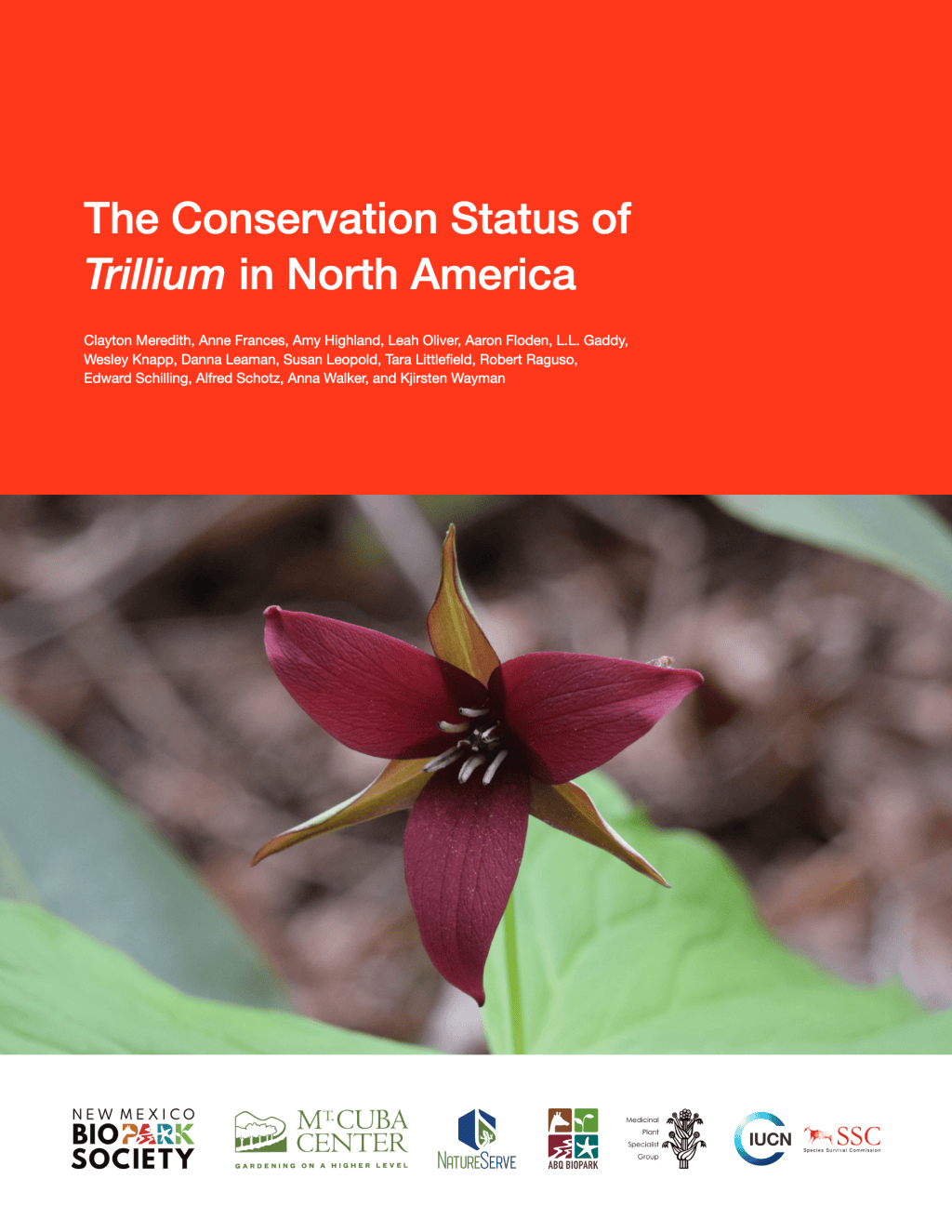
Conservation Status of Trillium in North America
Trilliums are among North America’s most recognizable native wildflowers. Their familiarity can obscure an important conservation reality: species with restricted ranges, slow life histories, and specialized habitats can be vulnerable to pressures that operate across entire landscapes.
A continent-wide assessment
Working with colleagues across the continent, I helped assess the conservation status of 53 Trillium taxa using both NatureServe and IUCN methodologies. The goal was not simply to assign ranks. It was to create a consistent picture of which trilliums are secure, which are declining, what is driving those declines, and where conservation attention is most urgently needed.
What threatens trilliums?
The assessment identified a suite of interacting pressures, including habitat loss and fragmentation, browsing by white-tailed deer, damage from feral pigs, invasive plants, harvest pressure, and other changes to forest ecosystems. These threats do not affect every species equally. Wide-ranging species may remain common overall while declining locally, while narrow endemics can be placed at risk by changes affecting only a small number of sites.
Why assessment matters
Good conservation begins with knowing what exists, where it occurs, and how it is doing. A rigorous assessment turns scattered botanical knowledge into priorities that agencies, land managers, botanical gardens, scientists, and conservation organizations can use. That progression from taxonomy and field knowledge to assessment and action has become a recurring theme throughout my career.
From science to a broader audience
The assessment also became an opportunity to bring plant conservation to people far beyond the scientific community. In 2022, Margaret Roach explored the conservation story of trilliums in The New York Times and subsequently invited me onto her A Way to Garden podcast to discuss rare plants, extinction, NatureServe, and why taking stock of native plant diversity matters.
The work in context
Trilliums are charismatic enough to attract attention, but the conservation problem they illustrate is much larger. Thousands of plant species receive far less public notice. Assessments like this provide the evidence needed to move from appreciation of biodiversity to deliberate action on its behalf.


Leave a Reply